


Late spring – baby birds and fat ponies
Late spring gave us heavy showers and warm sunshine. This caused the rapid growth of a beautiful wild flower meadow. It also caused some pony headaches.
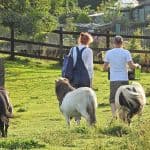
In April I was worried we wouldn’t have enough grass, in May I worried we’d have too much. I briefly put the ponies in the winter paddock when it was raining 24/7 so they could use the shelter. Within three days I had three blobs with little feet and heads sticking out, so I guiltily returned them to the Summer paddock.
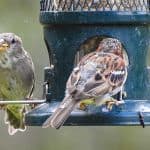
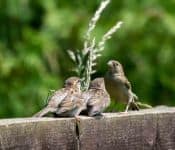
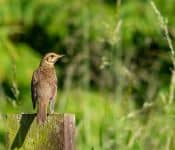
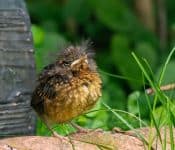
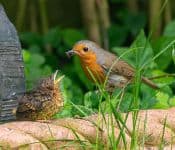
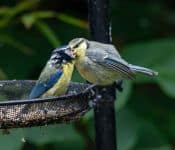
The field was a-cheep and a-flutter with baby birds, and it was great to see a juvenile songthrush amongst them. The poor parents looked thin, dishevelled and exhausted, and the baby blue tits were massive.
We put four bird boxes up in February, one on a tree, two on the outside of the cabin and one inside on the ‘verandah’. The only one to be occupied was the inside one – by a lovely wren family.
Skills we do not possess no. 3 – DIY
The guilt I felt leaving the ponies at the mercy of the English weather (never mind that they are Shetland ponies so evolved to withstand fierce storms and freeezing temperatures) overwhelmed me. Cue an eBay purchase of a pony shelter.
The shelter promised erection by two people in 20 minutes. Four hours and toys scattered liberally, the Leaning Shelter of Marko was complete. Happily the ponies quickly moved in and are especially appreciative when the sun makes a rare appearance. Not surprisingly they are perfectly happy outside in the rain.





The main job of the summer – wildlife ponds
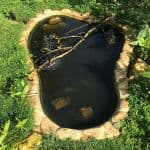
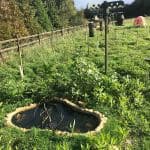
We have TWO wildlife ponds.
We had a quote in May to have it dug professionally, but the quoter did the usual Rutland tradesman thing and promptly disappeared off the face of the earth.
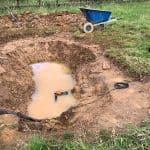
As a result, Phil spent many hours digging (I did some too!) and because of the high water table I spent a fair bit of time crouching in a muddy hole with a pump.
Our vision for a pond differs widely. I imagined something about 6 foot deep in the middle with a beach we could swim in and row on. Phil’s imagination was limited to a small garden pond sized watering hole.
What a few exhausting days of digging and pumping resulted in is a smidgen larger than Phil’s version.
At least Jeff can swim in it, just. Except for when it’s a muddy hole; the water table goes up and down as quickly as the weather.
A friend kindly gave us some aquatic and margin plants. Jeff took great interest in the roots of a large iris, and unearthed a dead goldfish which floated up to the surface. Sadly this was ZigZag, Jo’s favourite goldfish which she had reared from a fry.
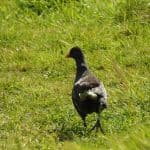
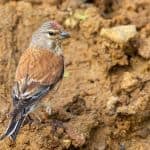
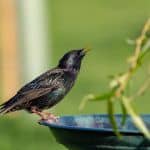
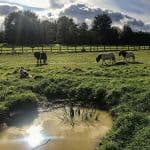
The ‘main pond’ quickly became a magnet for the local wildlife. Swallows came to take the mud for their nests and other birds come to drink and bathe. I’ve spotted green woodpecker, song thrush, yellow wagtail and a gorgeous linnet using the facility.
I ordered a cheap photography hide from Amazon which was perfect in spring, but quickly became too hot to sit in so is now an additional bright orange habitat for things that love 40 degree heat and 98% humidity. It was a well camouflaged leafy green and sand colour when I first put it up.
Facebook Marketplace yielded a small prefab pond, sold by a woman who needed a bigger pond for her newt infestation.
I recently noticed the blue mounting block was resting over a hole. Perplexed and wondering if there may be toads living in it, I moved the mounting block to discover a two foot deep excavation containg two six packs of Fosters.
A place for conviviality
By August, with the fine growing weather our trees were thriving. Many are now as tall as me.
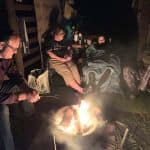
We carted our old pine dining table down to the field and enjoyed a few bbqs with friends. Phil’s Cousin brought his children camping for a few days, and we shared ghost stories and toasted marshmallows over a fire pit.
Despite no mobile signal or WiFi, the tech addicted kids have been pleading to come back ever since.




Mammalian visitors
Due to the inclement weather and my website design business taking me by surprise by taking off, we only stayed in the field one night this year.
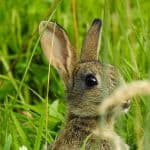
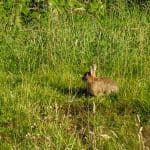
However, we spent a few evenings watching the setting sun and listening to the owls and night sounds. Foxes and muntjacs barked, and one night a hedgehog came snuffling loudly by.
The rabbit-sized squirrel who has chewed a hole in the side of the sturdy Keter storage box to get to the bird seed made an appearance. Four years of pondering the mystery of walnut shells appearing in the field when we don’t have any walnut trees was finally solved.

A living meadow
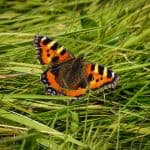
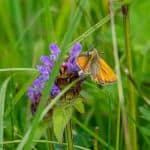
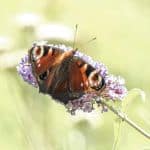
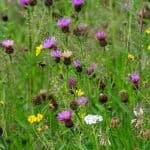
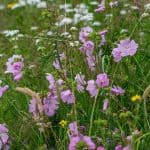
From a sparse, overgrazed field sprang a flower meadow. Butterflies and insects abounded. Speckled wood, skipper, common blue, small tortoiseshell, peacock, painted lady, brimstone, orange tip, lots of small white. Common marsh grasshoppers ping with every step.
By the end of may I accepted our swallows hadn’t made it home. Then mid June ten of them swept in. Suddenly the sky above field was alive with chattering swooping birds.
The nest in the feed room was rebuilt, and brood number one soon on the way.
By Early September most of the swallows in the village left. Ours built a new nest in the winter field shelter and raised another brood. As you can see, they were very appreciative of the ponies’ contribution.

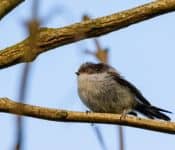
The finches and long tailed tits have now returned from wherever they went over the summer, and a flurry of coal tits has appeared and has been with us ever since. We have three or four coal tits in the field and garden respectively; previously coal tits were a notable rarity.
Our swallows have finally left, along with Rutland’s ospreys. The ponies are growing hairy and the leaves are browning. Fare thee well Summer 2019.
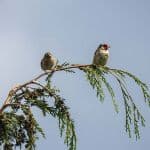
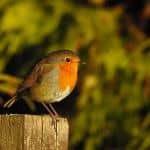
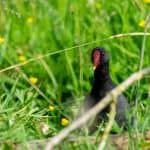
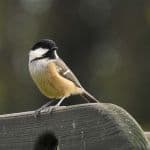
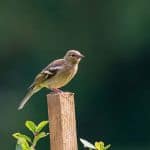
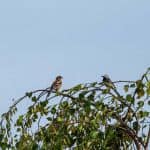
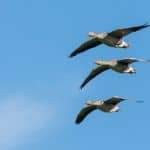
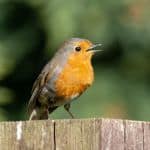
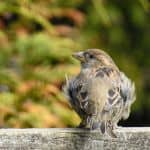
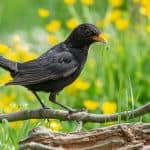
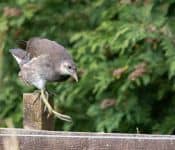
Below are a few bird photos taken in the field between June and September.